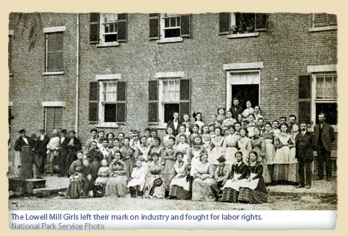
 National Parks service photo of a factory in Lowell,MA.
Unlike the lucky Ulmer brothers, so many other brothers did not return home. The list is extensive however I felt the need to include a few examples of those courageous men who died together on the battlefields:
Confederate soldiers and brothers Moses J. Hoge and A. Whitlock Hoge ages 21 and 29 were killed on the same night at the bloody Battle of Cloyd’s Farm on May 9,1864.
A private cemetery in Taylor Co, Ga. shows 3 of 4 Carson brothers, all Confederate soldiers who were killed in battle or died of their wounds leaving the 4th brother to return home alone.
Brothers Edwin and Henry Lee from the 11th Connecticut Infantry were both killed in the War, Henry leaving behind a wife and four children.
Also from Connecticut, the three Wadman brothers died in battle in Virginia in the summer of 1864. Brothers Alvin and George Flint and their father Alvin Sr. also perished at this time.
The Civil War ended on April 9, 1865. Civil War experts estimate the loss of lives at between 620,000-700,000. The Eighth Maine Volunteer infantry Regiment lost 381 men, 247 of which died from disease. With a population of 31,443,000 people in 1860, this means that close to 2% of the population was killed in the Civil War. Compare that number with today’s War on Terror where around 5,500 have been killed, with our current population of 294,043,000: this translates to less than .oo2%. The Civil War was responsible for more deaths per population than ANY OTHER WAR in U.S. history. The sheer number of families who lost their beloved sons, husbands and fathers is mind boggling.
The anguish back home resonated for years as widows struggled to somehow manage life without their men. Poverty became a reality and many women left the farms desperate to provide for their families by working in factories in big cities. It was the rise of the Industrial Revolution. In 1870, only two American cities held populations of more than 500,000 but only 30 years later by 1900, there were six, and New York, Chicago, and Philadelphia each had over one million inhabitants. Soon, approximately 40% of Americans lived in cities and the number was climbing.
The entire country was shifting and changing. There was excitement and hope. Railroads were expanding travel all the way to California and our unscathed Ulmer boys were ready to take on the world. Please continue to follow this lively family as they traverse the U.S., triumph on the stage, become playwrights and newspaper magnates and live life to it’s fullest.
Next Up: Charley’s Bride

 me and lizzie may